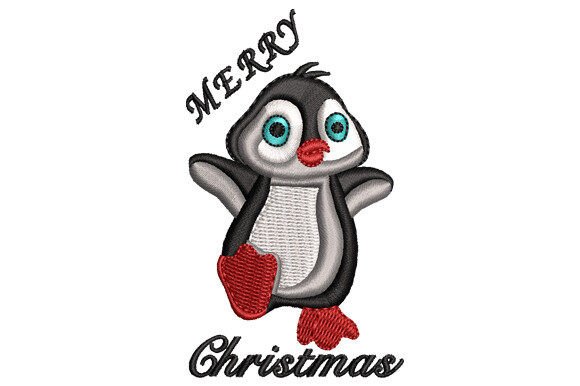
Merry Christmas Penguin: A Designer’s Practical Review
As an embroidery designer who has spent countless hours hooping, stitching, and unpicking, I approach every new machine embroidery design with a mix of curiosity and caution. We all know that what looks perfect on a screen does not always translate seamlessly to fabric. When I first loaded the Merry Christmas Penguin file into my software, I was looking for more than just cuteness. I wanted to see if this design had the structural integrity to hold up in real-world applications, from high-traffic retail items to delicate personalized gifts.
First Impressions and Visual Personality
The immediate mood of the Merry Christmas Penguin is warm and inviting. It avoids the overly complex detailing that often plagues holiday designs, opting instead for a clean, recognizable silhouette. For a designer, this simplicity is a strength. Complex shapes with tiny, isolated stitches are nightmares for production efficiency and durability. This design feels balanced, with a layout that suggests thoughtful planning regarding stitch direction and density.
The visual personality is playful yet professional. It does not scream "amateur hour." Instead, it offers a charming aesthetic that fits well within modern handmade trends. Whether you are an Etsy seller curating a boutique collection or a hobbyist making gifts for family, the design carries a level of polish that elevates the finished product. It creates an instant emotional connection, which is crucial for holiday sales where impulse buying drives revenue.
Real-World Application: The Tote Bag Test
To truly evaluate an embroidery file, you must imagine it in context. I recently considered this penguin for a custom order of canvas tote bags. These bags need to be durable, washable, and visually striking from a distance. The Merry Christmas Penguin worked exceptionally well here. The bold lines ensured visibility even when the bag was folded or partially obscured.
Beyond tote bags, this design shines in several other categories:
- Sweatshirt embroidery: The design scales beautifully on chest pockets or larger back placements without losing clarity.
- Baby embroidery: Soft, rounded edges make it safe and appealing for onesies and burp cloths, provided the stitch density is adjusted for delicate skin.
- Embroidered patch: With a proper satin stitch border, this penguin becomes a standout iron-on or sew-on accessory for jackets and hats.
- Kitchen textiles: It adds a festive touch to aprons and tea towels, bringing joy to mundane household items.
For craft business owners, versatility is key. A design that only works on one fabric type limits your market. This penguin demonstrates adaptability, working on both woven cottons and heavier fleece materials, making it a valuable asset for diverse product lines.
Technical Considerations for Stitching Success
While the design is charming, technical execution determines its success. Here are the practical notes I jotted down during my evaluation:
Fabric and Stabilizer Choices
The interaction between thread and fabric texture is critical. On smooth cotton or linen, the satin stitch elements will pop with a nice sheen. However, on textured fabrics like terry cloth or heavy wool, you may need to increase the underlay or use a cut-away stabilizer to prevent sinking. Always test on scrap fabric first. Do not assume the default settings will work for every material.
Stitch Density and Detail
Check the stitch density carefully. If the design relies heavily on fill stitch areas, ensure they are not too dense for lightweight fabrics, which can cause puckering. Conversely, if the details are created with running stitch outlines, verify that they are thick enough to be visible on dark fabrics. I recommend running a test in black and white mockups to check contrast before committing to colorful threads.
Hoop Size and Placement
Confirm the recommended hoop size before starting. While the design may fit in a standard 4x4 hoop, placing it off-center on a cap or curved surface requires precise positioning. For custom apparel like caps, the curvature can distort the image if the design is too wide. The Merry Christmas Penguin appears compact enough to handle slight curves, but always hoop with care.
Commercial Viability and Brand Consistency
For commercial embroidery projects, consistency builds trust. Customers return to shops that deliver reliable quality. This design supports brand consistency because it is clean and reproducible. It does not rely on fragile details that might break after multiple washes. This durability enhances customer trust and reduces return rates.
Moreover, the design aids in creating effective printable mockup assets for online listings. A clear, attractive design photographs well, helping potential buyers visualize the personalized gift they are purchasing. High-quality visuals drive engagement, and this penguin delivers on that front.
Where to Use Caution
No design is universal. There are scenarios where you should proceed with caution:
- Thin or stretchy fabrics: Without proper stabilization, the weight of the embroidery can distort jersey knits or silk.
- Very small hoop sizes: If scaling down significantly, ensure the tiny details do not merge into a blob of thread.
- Dark fabrics: If the design uses light thread colors, ensure there is sufficient coverage to prevent the fabric from showing through gaps in the stitching.
- High-wear areas: Avoid placing large fill areas on parts of garments that experience constant friction, such as underarms or inner thighs.
Final Verdict for Designers and Makers
The Merry Christmas Penguin is a solid addition to any design assets library. It balances aesthetic appeal with practical stitchability. For small shop product lines, it offers a low-risk, high-reward option for holiday inventory. It is not just a cute image; it is a functional tool for creating value.
Before selling finished items or digital products, always confirm licensing terms. Ensure you have the right to use the digital embroidery file for commercial purposes. Once cleared, this design is ready to bring personality to your fabric. Whether you are embellishing home decor or creating a unique holiday embroidery gift, this penguin stands up to the scrutiny of professional use. It is a reminder that good design is not just about how it looks, but how it works.
Remember, the best way to judge any embroidery project is to stitch it out. Take the time to review thread colors, adjust tension, and choose the right stabilizer. The effort you put into the technical setup will reflect in the quality of the final piece, turning a simple design into a cherished keepsake.