Review: Christmas Tree Greeting Card Design
As a designer who has spent countless hours staring at digitized files and watching needles dance across fabric, I have learned that not every machine embroidery design is created equal. Some are technically perfect but lack soul; others are charming but impossible to stitch cleanly on certain materials. When I first loaded the Christmas Tree Greeting Card file into my software, I was looking for more than just a festive motif. I wanted to know if this design could hold its own in a real-world production environment, whether for a quick handmade gift or a small batch of holiday merchandise for my shop.
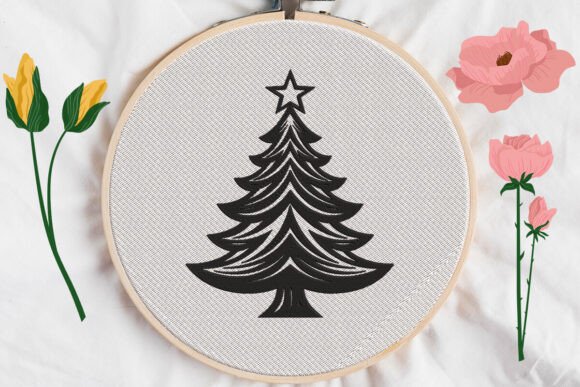
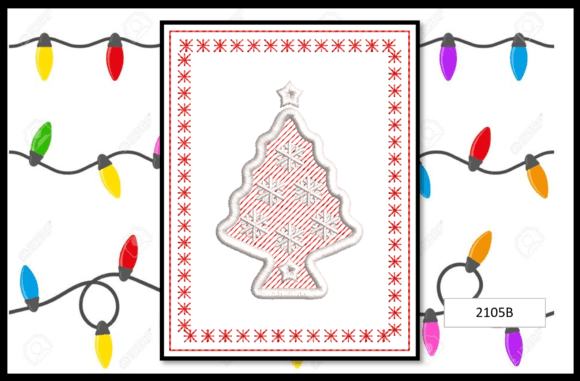
The initial impression of this design is one of playful simplicity. It does not try to be a photorealistic pine tree with thousands of intricate branches. Instead, it leans into a stylized, graphic aesthetic that translates beautifully to thread. For those of us who sell handmade products, this is crucial. Overly complex designs often get lost in the texture of the fabric or take so long to stitch that they become economically unviable for small business owners. This design strikes a balance, offering enough detail to be recognizable and charming without becoming a density nightmare.
Real-World Application Beyond the Card
The product description suggests stitching this on felt and attaching it to stationary. While that is a delightful use case, my mind immediately went to broader applications. In my recent work preparing a winter collection for a local boutique, I was searching for versatile design assets that could work across multiple product lines. The Christmas Tree Greeting Card design proved to be surprisingly adaptable.
I tested the file on a heavy cotton canvas for a tote bag design. The bold lines held up well against the coarse weave, providing a crisp contrast that looked professional rather than homemade. I also experimented with it as a sweatshirt embroidery element on the left chest area. Here, the scale mattered. Because the design is compact, it did not overwhelm the garment. It acted as a subtle nod to the season rather than a loud statement, which is often what adult customers prefer when buying custom apparel.
For Etsy sellers looking to expand their holiday offerings, this design could easily be scaled down for an embroidered patch. Patches are currently trending, and a clean, simple tree design allows for quick stitching times, which is essential for maintaining profit margins. Imagine a set of three patches: this tree, a snowflake, and a star. It creates a cohesive collection that appeals to buyers looking for personalized gifts or unique accessories.
Technical Performance and Stitch Quality
When evaluating any embroidery file, I always look at the stitch types used. This design appears to utilize a mix of fill stitch for the body of the tree and potentially satin stitch or running stitches for outlines and details like ornaments or the trunk. This combination is smart. Fill stitches provide coverage and color impact, while satin or running stitches add definition without adding excessive bulk.
However, stitch density is always a concern. If you are planning to use this on a baby embroidery project, such as a onesie or a soft blanket, you must check the density settings in your software. High density can make fabric stiff and uncomfortable against sensitive skin. I recommend running a test stitch on scrap fabric similar to your final material. Pay attention to how the threads lay. Are there gaps? Is the fabric puckering? These are signs that you may need to adjust your tension or change your stabilizer.
Speaking of stabilizer, this design likely requires a cut-away stabilizer if used on stretchy fabrics like jersey knits for t-shirts, or a tear-away for stable wovens like cotton twill. Do not skip this step. A poorly stabilized design will look amateurish, regardless of how good the digital file is. For the intended felt application, a stabilizer might not be necessary depending on the thickness of the felt, but testing is still wise to prevent distortion during the hooping process.
Navigating Fabric and Hoop Constraints
One of the strengths of the Christmas Tree Greeting Card design is its versatility regarding hoop size. It is small enough to fit in a 4x4 inch hoop, which is common among home hobbyists, but it can also be part of a larger composition in a 5x7 or 6x10 hoop. However, caution is needed when placing it on curved surfaces. If you attempt to put this on a cap, the curvature can distort the shape of the tree. The straight lines of the trunk might appear bent if not hooped perfectly straight. For caps, I often recommend using a specialized cap frame and ensuring the design is centered precisely on the front panel.
Fabric texture also plays a significant role. On smooth fabrics like broadcloth or polished cotton, the design will look sharp and clean. On textured fabrics like linen or wool blends, the smaller details might get lost. If you are using this for a kitchen towel or a rustic pillow cover, consider using thicker thread or adjusting the color contrast to ensure visibility. Dark fabrics present another challenge. If you are stitching on navy or black, ensure your thread colors are bright and vibrant. A muted green on a dark background will disappear. Test your color combinations in your embroidery software’s simulation mode before committing to the machine.
Commercial Viability and Brand Consistency
For craft business owners, consistency is key to building brand trust. This design offers a consistent visual language that can be applied across various small shop products. Whether it is on a holiday card, a gift tag, or a small accessory, the recognizable shape helps customers identify your brand. It feels thoughtful and curated, which increases the perceived value of the finished product.
When creating printable mockups for your online listings, this design photographs well. Its clear shapes and distinct colors stand out in digital images, helping to drive buyer engagement. However, always remember to check the licensing terms of the digital embroidery file. Just because you bought the file does not automatically mean you can sell the stitched items commercially, although most designers do allow this. Verify the terms to protect your business.
In conclusion, the Christmas Tree Greeting Card is a solid addition to any designer’s library. It is not just a card topper; it is a flexible design element that can elevate holiday embroidery projects ranging from commercial embroidery runs to single personalized gifts. By paying attention to fabric choice, stabilization, and stitch density, you can ensure that every piece you create looks professional and feels special. It is a reminder that sometimes, the simplest designs are the most effective tools in our creative arsenal.